
Our conversation when preparing for the next leg of our adventure went something like this: Me: Here is something that looks interesting to visit, and it’s near Saguaro National Park. Dennis: What is it? Me: Not sure. It’s called Biosphere 2. Have you heard of it? Dennis: Yeah, I think it was an experiment that did not go well. Me: Why is it called Biosphere 2, and what happened to Biosphere 1? Dennis: Not sure.
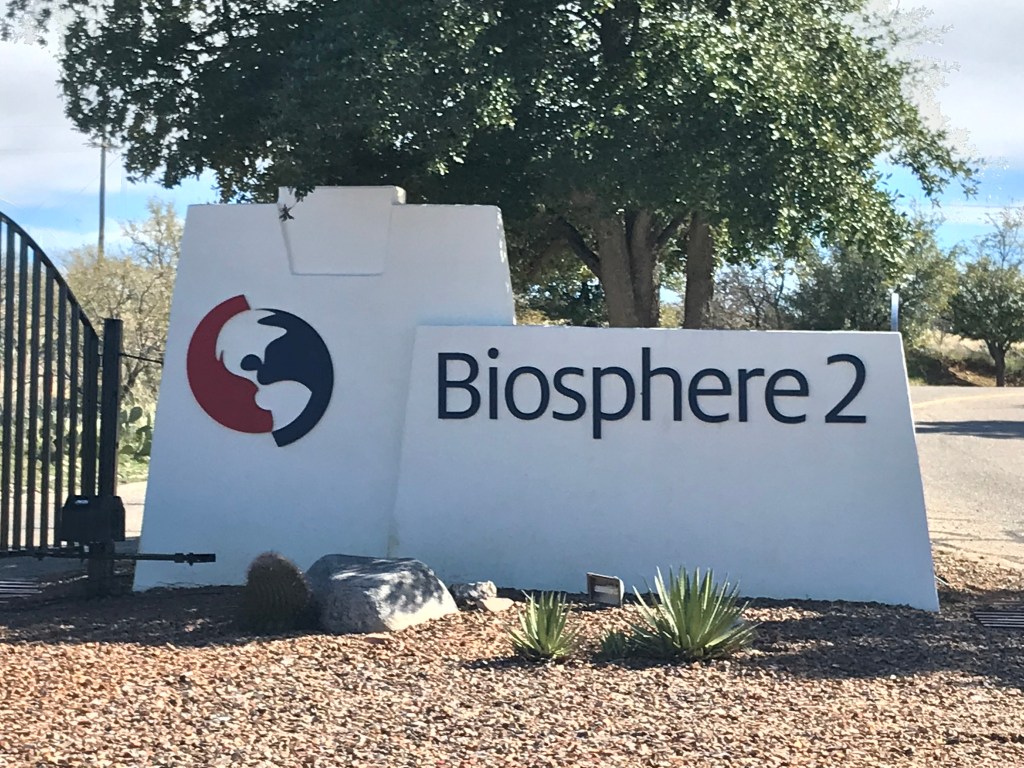
During our tour, we learned Biosphere 2, as it duplicates the major climates of the original biosphere, Earth (ohhh, we get it!) Several adjectives used to describe Biosphere 2: impressive, breathtaking, otherworldly, unique, beautiful, futuristic, innovative, and failure. A failure? Yes. The first Biosphere 2 experiment is regarded as a failure by some within the scientific community. A second attempt at replicating the first experiment ended after six months, not the planned two years.
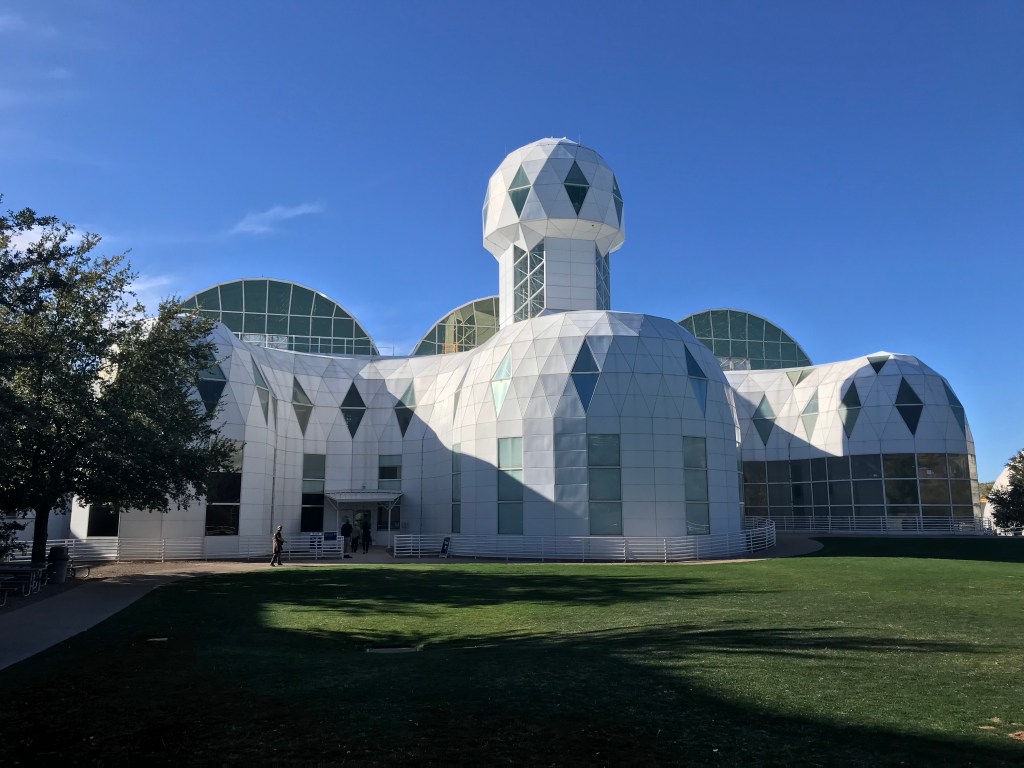
Biosphere 2 main entrance 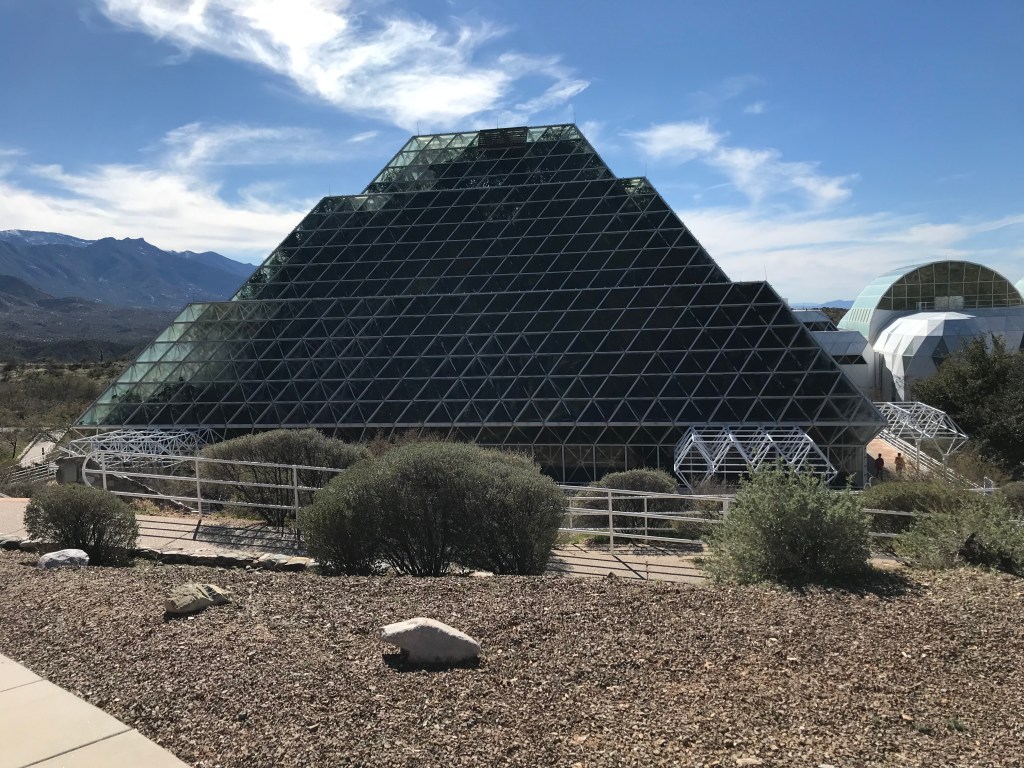
Glass pyramid to left of main entrance 
Dome to right of main entrance
Conceptualized in 1984 with construction completed in 1991, the purpose of Biosphere 2 was to create a self-contained ecosystem able to sustain seven people for two years. Hermetically sealed into the biosphere were seven scientists with different specialties. Included in the group, a physician collected data on the implications of said experiment on the other participants. Problems emerged quickly. They were becoming more focused on food production, harvesting, and other necessities to survive, leaving little time to engage in scientific pursuits. Miscalculation of oxygen levels made it essential to pump extra oxygen into the biosphere. One scientist chopped the tip of her finger off and left for six hours to receive medical attention. Several scientists observing the experiment complained the two incidents broke the seal which, voided the research, making it a failure.

Ocean 
Tree line 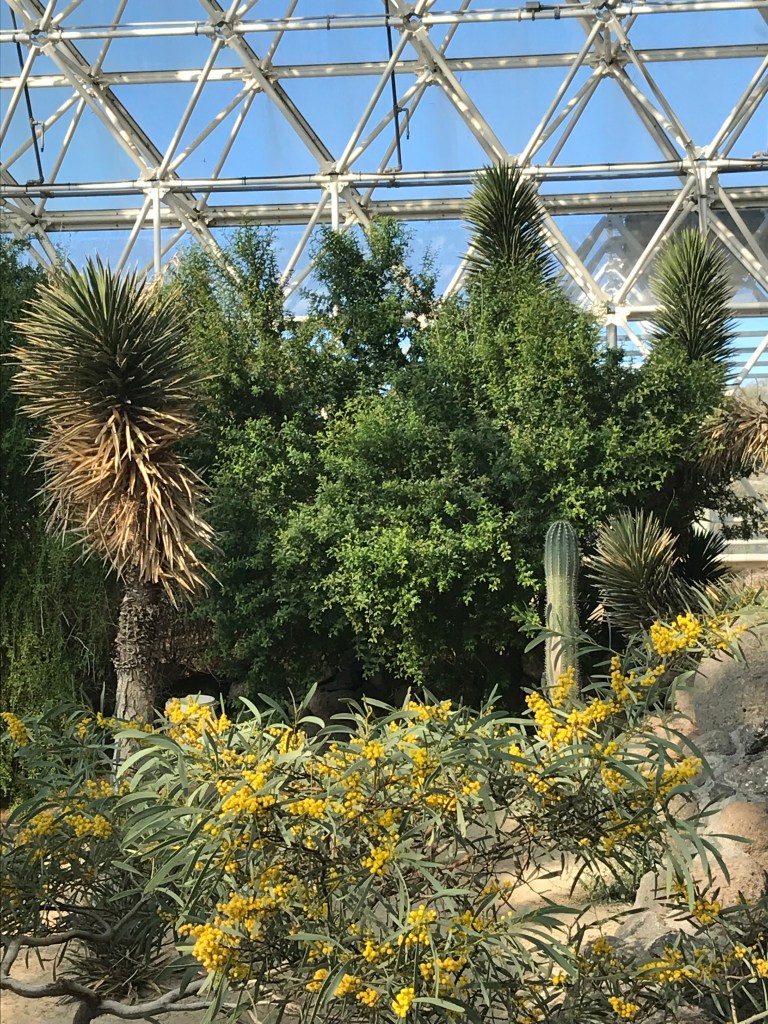
Desert 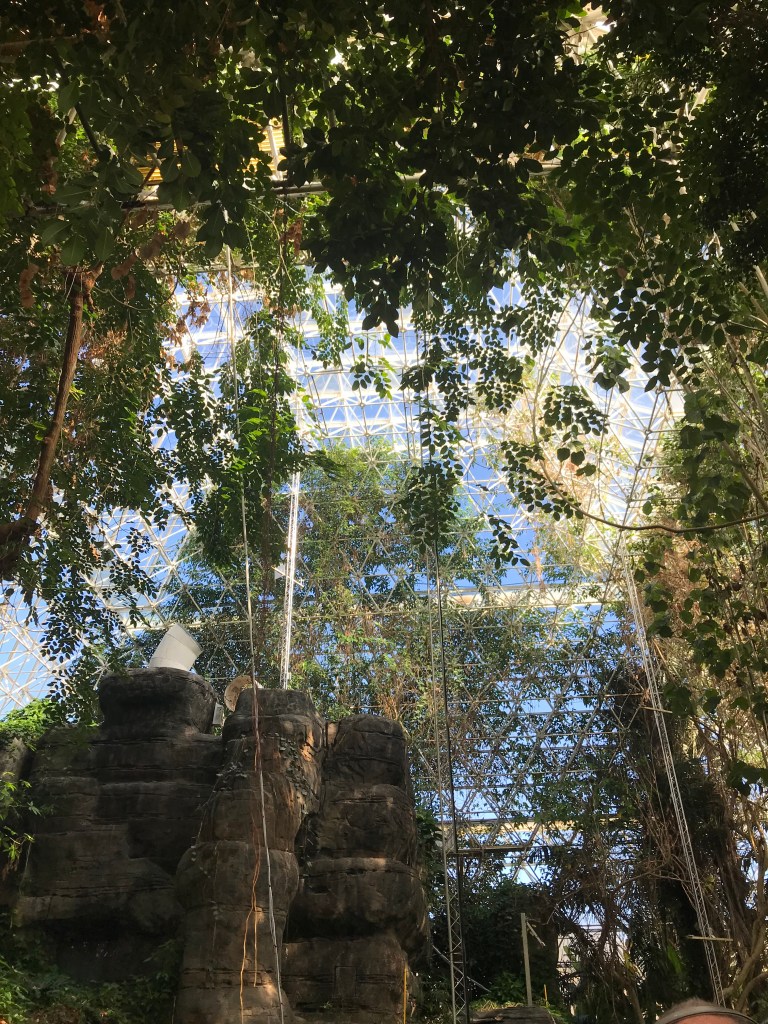
Rainforest 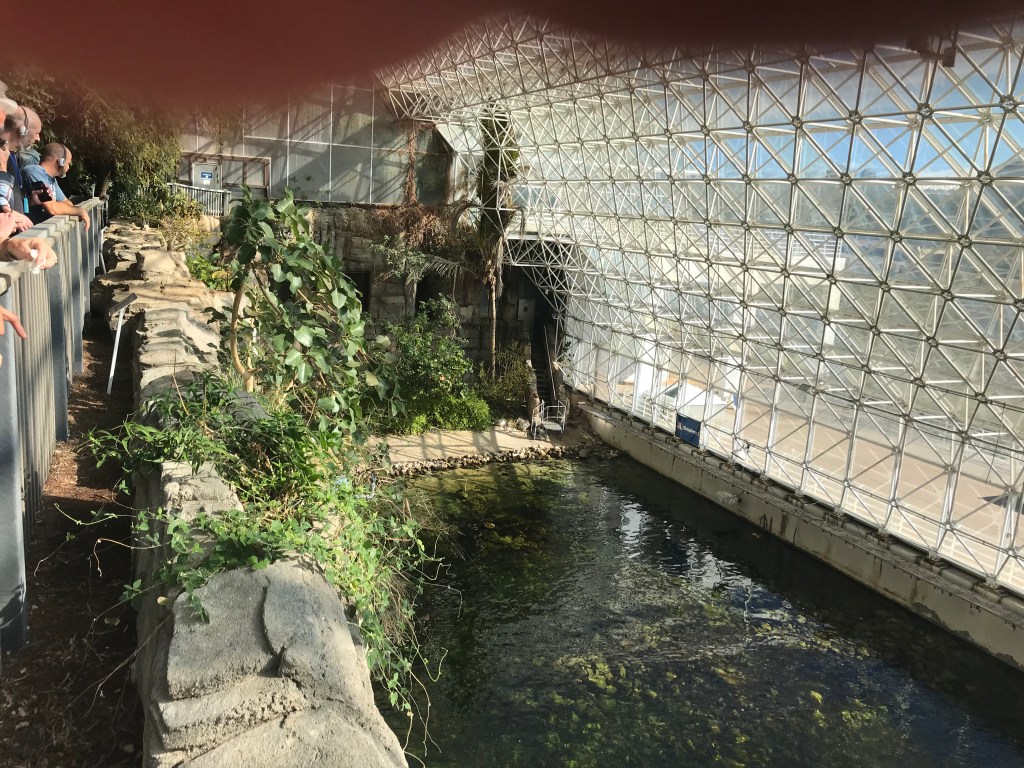
Overlooking ocean 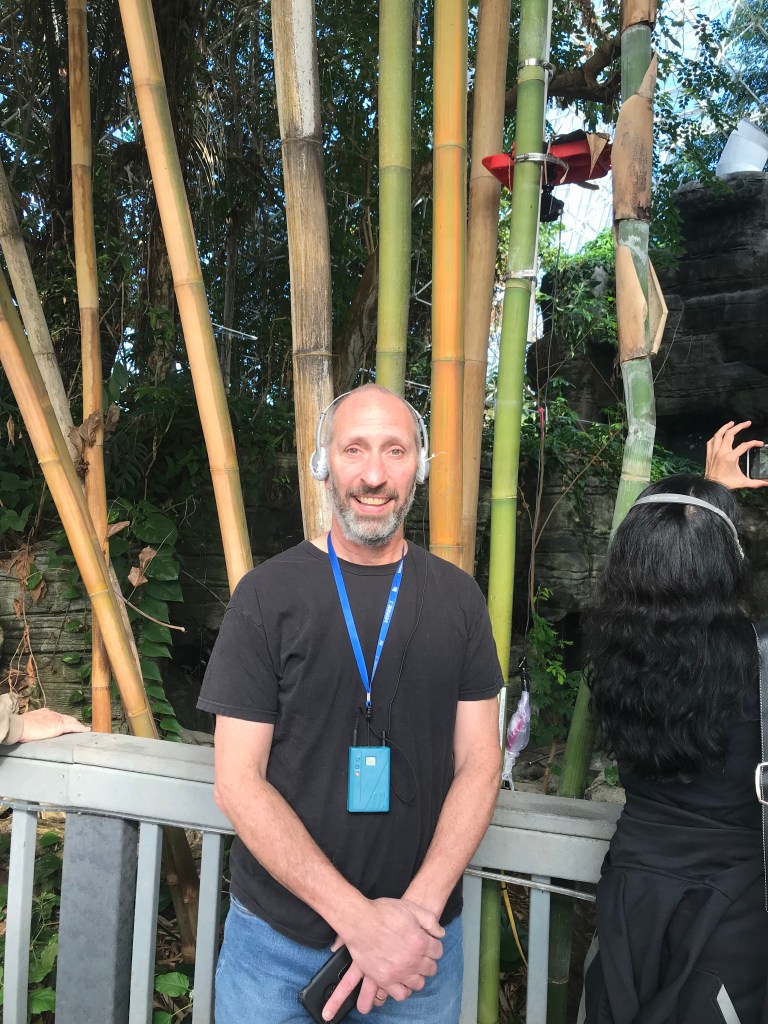
Enjoying tour 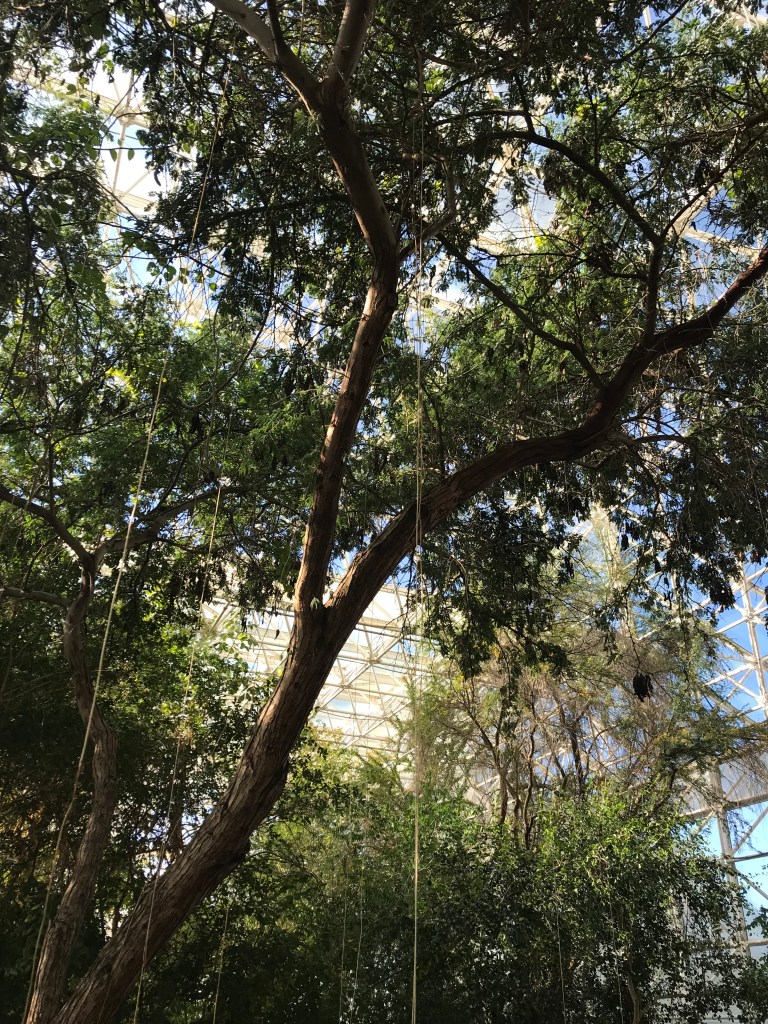
Rainforest 
Desert 
High desert
Today Biosphere 2 is used strictly for non-human research. The controlled environment is used to understand climate change and for the betterment of our planet. Advanced research into farming systems, using scant amounts of water and solar panels in various ways, helps to address hunger due to global food shortages. Applying knowledge and information gathered from previous experiments, scientists are creating self-sustaining gardens for the prospects of living in space for extended periods.
Our day at Biosphere 2 included three tours, so we spent the better part of a day there. There was an overlapping of some information by the guides, however, it did not detract from the experience. In our opinion, this is a must-see attraction.
Watching the Super Bowl was our next must-do activity. Rushing back to the hotel, changing our clothes, and walking to a nearby sports bar, we snagged one of the last tables available. Despite being in a room full of people, we felt lonely. For the last ten years, we have thrown a Super Bowl party. We missed sharing the experience with family and friends. Bummed over the 49ers defeat, we were excited for our first stop in the state of Texas. We’ll call the next episode, “The Marfa Experience.”
 The Unexpected Gap Year